
Understanding cards
How Much Are Your One Piece Cards Worth?
A useful card valuation answers a precise question: what are buyers paying for this printing, in this language and condition? Searching only for “Luffy card price” is too broad. Even a card number may lead to several versions with very different values.
Before you decide to buy, sell, or trade, spend a few minutes identifying the card and checking comparable transactions.
Identify the exact printing
Record the character name, card number, artwork, language, and any visible stamp or special finish. Then establish whether the card is raw or professionally graded. A raw card is simply one that is not encapsulated with a grading company’s assessment.
For a graded card, the company and grade are essential parts of the comparison. A price for a top-grade example does not describe the value of an ungraded copy, even when the artwork matches.
If you are unsure which version you own, resolve that first. A precise price attached to the wrong printing is still wrong.
Understand the number you are reading
An asking price is what a seller wants. A completed sale records a transaction. A market estimate combines information according to a provider’s methodology. These numbers answer different questions.
For example, TCGplayer explains that its Market Price uses recent sales across multiple transactions rather than relying only on current listings. That makes it useful context, but it does not promise that your particular copy will sell for the displayed amount. TCGplayer’s pricing explanation.
Check the date and source of a price. A recent estimate supported by several comparable sales deserves more confidence than one old transaction or an unusually ambitious listing.
Compare the condition honestly
Look at corners, edges, front and back surfaces, and any dents or creases. A card taken straight from a pack can still have manufacturing defects. Inspect it under angled light before calling it Near Mint.
Use the condition definitions of the marketplace where you plan to trade. Similar abbreviations can mean different things across platforms. Avoid applying a universal percentage discount: the difference between clean and damaged copies depends on the specific card and available buyers.
If there are no close comparisons, give a range and explain the uncertainty. An honest range is more useful than a falsely exact figure.
Calculate what a sale would leave you
The sale price is not your final proceeds. Subtract selling fees, delivery you cover, packaging, and any other transaction costs.
Suppose a card sells for €100 and the total selling costs are €15. Your proceeds are €85 before considering what you originally paid. This is a hypothetical calculation, not a fee quote for any marketplace.
Selling a whole collection can also produce a different result from selling every card separately. A buyer taking many cards at once may expect a discount for the time, risk, and work involved in reselling them.
Use price history with context
A rising chart tells you that the recorded price increased. It does not tell you that buyers will keep paying more. Check whether recent activity is broad or based on very few transactions, and whether a new release or reprint has changed availability.
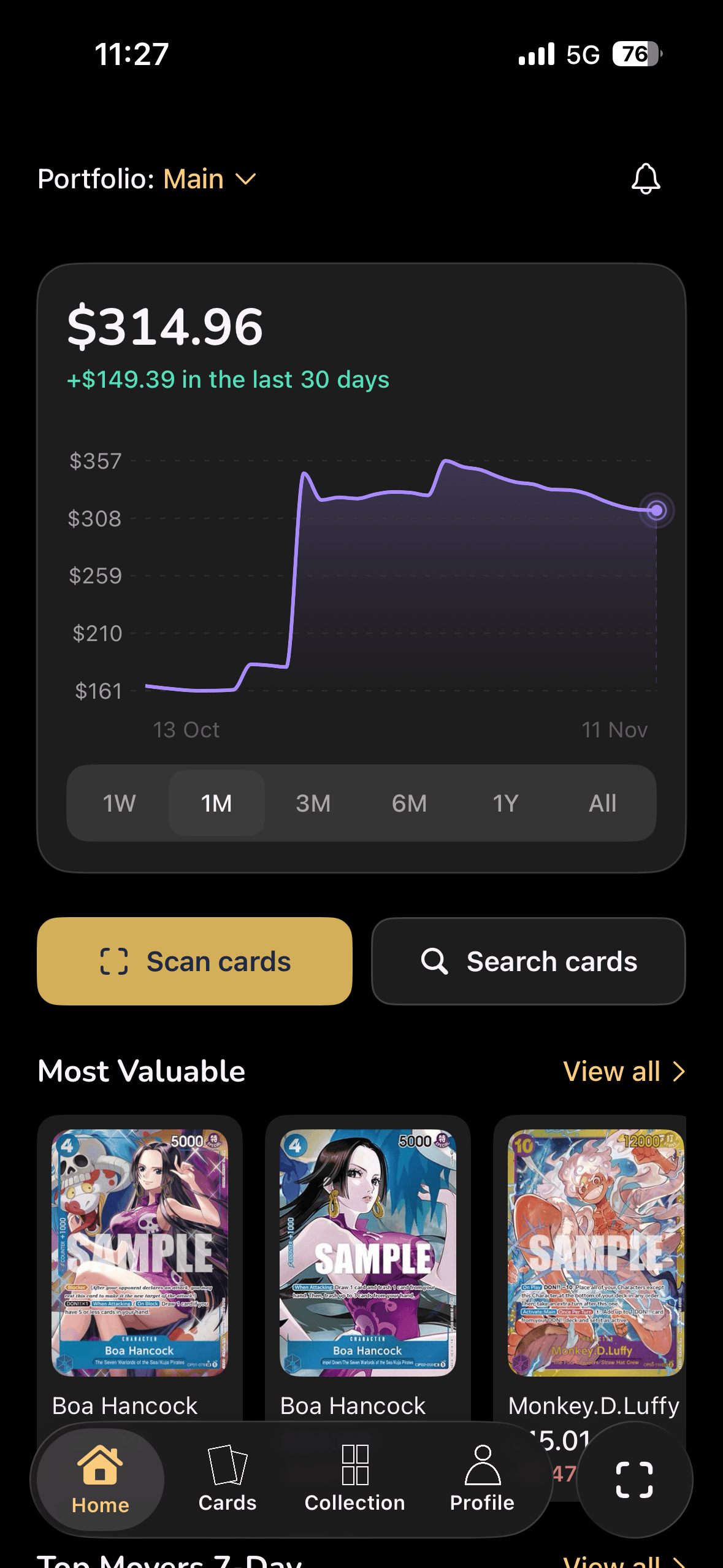
Use OneDex to review available card prices and price history, and keep your portfolio quantities accurate. Treat the portfolio total as a collection reference rather than a guaranteed cash offer.
Common questions
Why is my card listed at several prices? The listings may differ in version, language, condition, delivery costs, or seller expectations.
Does a missing price mean a card is worthless? No. It can mean there is not enough suitable pricing information.
Should I use the highest recent sale? Use a group of relevant comparisons. One exceptional transaction may not represent the market.
See how the same card changes
Compare the artwork, set and price of these Boa Hancock OP01-078 printings. A card number alone does not identify the version.
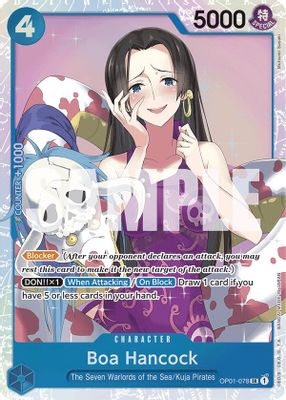
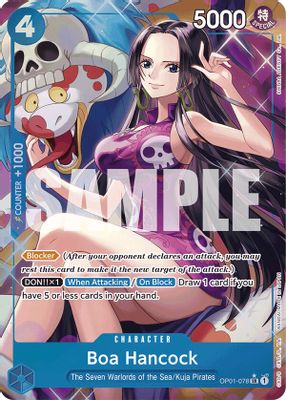
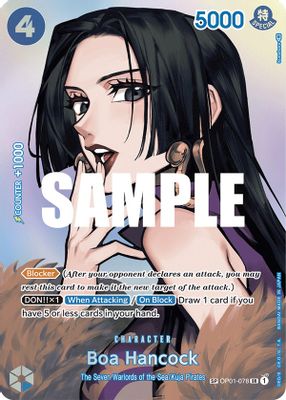
TCGplayer market estimates. Condition and grading affect value.
 OneDex FOR IPHONE
Your next chapter starts with a scan.
Put your collecting plans into practice. Scan your cards, organise what you own and follow your collection’s value with OneDex.
Scan · Collect · Follow its value
Download on the App StoreTake a look inside